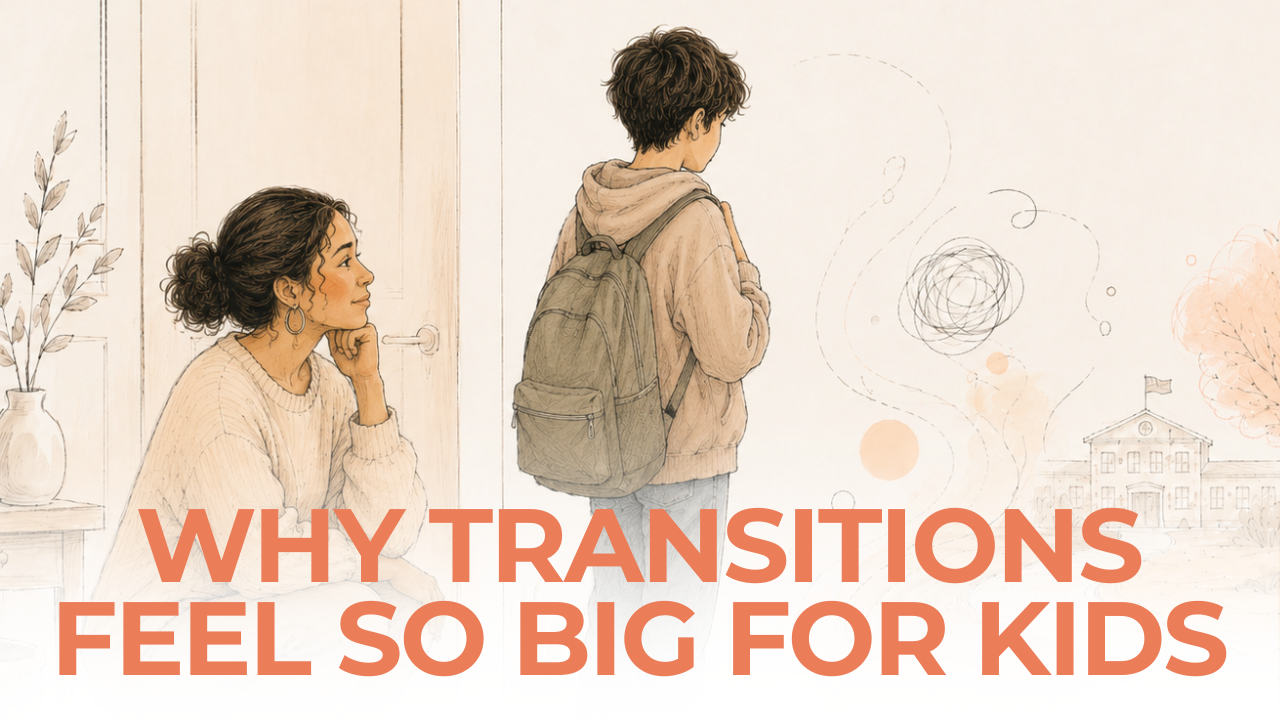
Raising adolescents (young and more mature) is not for the faint of heart.
…Or for people who need immediate gratification.
…Or for anyone who likes being liked all the time.
If you fall in that category, blink twice, you’re not alone.
Adolescents have a special and magical way of pulling on everything in us all at once: our patience, our fear, our old wounds, our desire to control outcomes, and our fantasy that if we say the right thing in the right tone at the right moment, they’ll suddenly say, “You’re right, Mom/Dad. Thank you for your wisdom.” They also pull at our pride, love that we never thought was possible, our hope, our joy… our everything. They are freakin’ powerful creatures.

Here’s the hard and hopeful truth:
Your kid does not need you to be perfect
They need you to be regulated, present, and willing to stay in the room, emotionally, even when it’s uncomfortable. They need you to learn how to postpone your own agenda at times, and hold space for their wild, erratic and brilliant minds.
Adolescence is a developmental unraveling.
Their job is to push, pull away, question, and experiment.
Your job is to be the steady presence while they figure out who they are becoming.
And…we aren’t built for constant steadiness. When you lose your footing and feel wobbly, lean into the presence of safe adults you can trust. And most of all be gentle with yourselves.
What does steady look like:
• Less fixing, more listening
• Fewer lectures, more curiosity
• Strong boundaries without shutting down
• Repair when you mess up (because you will)
Let’s talk about boundaries, because this is where so many of us get tangled.
When our kiddos mess up (and they will), the goal of a boundary is not punishment.
The goal is learning, safety, trust and natural consequences.
Holding a boundary gives the message:
I care too much about you to let this slide, and I care too much about our relationship to shame you.
A strong boundary is calm, clear, and predictable.
It doesn’t come from anger or fear.
It doesn’t require a speech.
And it doesn’t mean you withdraw love.
You can be warm and firm at the same time.
You can say, “This isn’t okay,” without saying, “You aren’t okay.”
One of the biggest traps I see parents fall into is confusing discomfort with danger. Your adolescent’s big emotions, withdrawal, eye-rolling, or sudden independence can feel alarming. But most of the time, it’s not a crisis, it’s growth. Messy, awkward, loud growth.
The question to ask yourself isn’t: “How do I make this stop?”
It’s: “How do I stay connected through this?”
Connection doesn’t mean agreement. It means your kid knows: I can feel what I feel, mess up, and still belong here.
And yes, sometimes that looks like:
• Talking in the car instead of face-to-face
• Sitting quietly instead of asking questions
• Holding your tongue (a true spiritual practice)
• Saying, “I hear you,” when every cell in your body wants to say, “That makes no sense you idiot!”
If you’re exhausted, you’re not doing it wrong.
If you’re questioning yourself, you’re paying attention.
If you care this much, your kid feels the love whether they admit it or not.
Parenting is a long game. And presence, not perfection, is what wins it.
Cheers to us!!! We got this.
With Love & Respect,
Deb
PS: I am taking new Therapeutic Parent Coaching Clients for 1:1 sessions (all parents of all genders!) Virtual & In Person.