Why Transitions Feel So Big for Kids
I’m finally crawling out of my internal cave, the one I tend to love during slower seasons. A cave of quiet, reflection, and softer mornings. I hope you’ve had a few moments of that too.
By now, I’m guessing many of you are finding your way back into the rhythm of school, schedules, activities, and the daily logistics of family life. Cue the happy dance for some of us, and the dread, resistance, and morning battles for many of us. Add in the emotional rollercoasters that come with transitions, and here we are. Whatever this season has looked like for you, I promise you are not alone.
Transitions can be incredibly unsettling for kids. Sometimes we see regression and acting out, regardless of age. What I want to remind you is that transitions activate a lot beneath the surface.
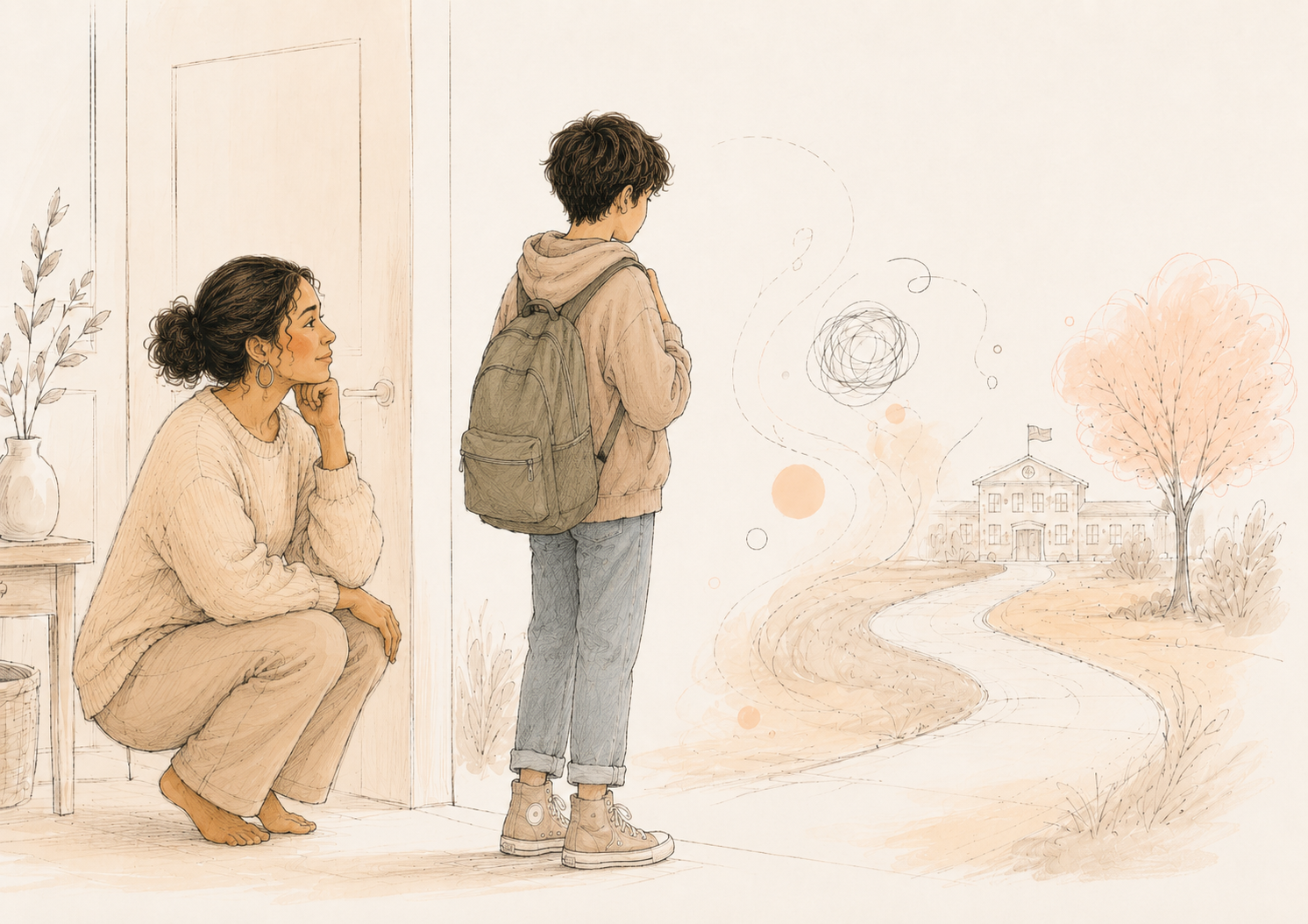
First, there is the loss of predictability. Even if school itself is familiar, it is still very different from being on break, vacation, or simply a slower rhythm. Transitions disrupt what feels known and safe. Re-entering a busy school environment, alongside lots of other kids who are also transitioning, can feel disorganizing and wonky. Even positive changes carry a sense of loss. Loss of sleeping in, extra family time, and less structure. Kids do not always have words for this, so it often shows up as irritability, withdrawal, or pushback.
There is also grief and excitement happening at the same time. You have heard me say this before. We can hold multiple opposing emotions at once. Sad about what we are leaving and excited about what is ahead. Early adolescents may begin to name this, which is actually a sign of emotional maturity. Younger kids do not yet know that this is what they are experiencing, and it can feel overwhelming. When mixed emotions are hard to hold, they often come out sideways as anxiety, tears, or anger.
Then there is fear of separation or disconnection. Transitions can unconsciously register as questions like, Will I still belong? Will I still be close to you? Will I be okay with my friends or teachers? This is why kids may cling, regress, or seek extra reassurance. For little ones, it can look emotional or needy. For tweens and teens, it can look withdrawn or apathetic. All of it is normal.
And lastly, identity wobble. Transitions often come with new roles and expectations. A new semester, new routine, new class, new activity, or new stage of development can shake a child’s confidence and stir up self-doubt, especially in middle school and adolescence. And yes, some kids feel motivated and inspired by change. I see you. But regardless of temperament, transitions still stir things up internally.
So why does this matter?
Because their emotions, regression, irritability, and apathy can be deeply triggering for us. We end up feeling burnt out, self-critical, and unsure of our parenting. When we take a peek into their inner world, we can offer more compassion to them and to ourselves.
They are clumsy humans, just like us. And while their big behaviors can be incredibly dysregulating and, honestly, annoying, it might not be that deep, as the teens say. It might simply be a transition rocking their world.
So take a breath. Grab some popcorn. Try observing without jumping onto the roller coaster with them. And please, please, please be gentle with yourself. Remember, we are in transition too.
You are doing better than you think.
With love & respect,
Deb
PS: I am taking new Therapeutic Parent Coaching Clients for 1:1 sessions, virtual and in person, for parents of all genders.