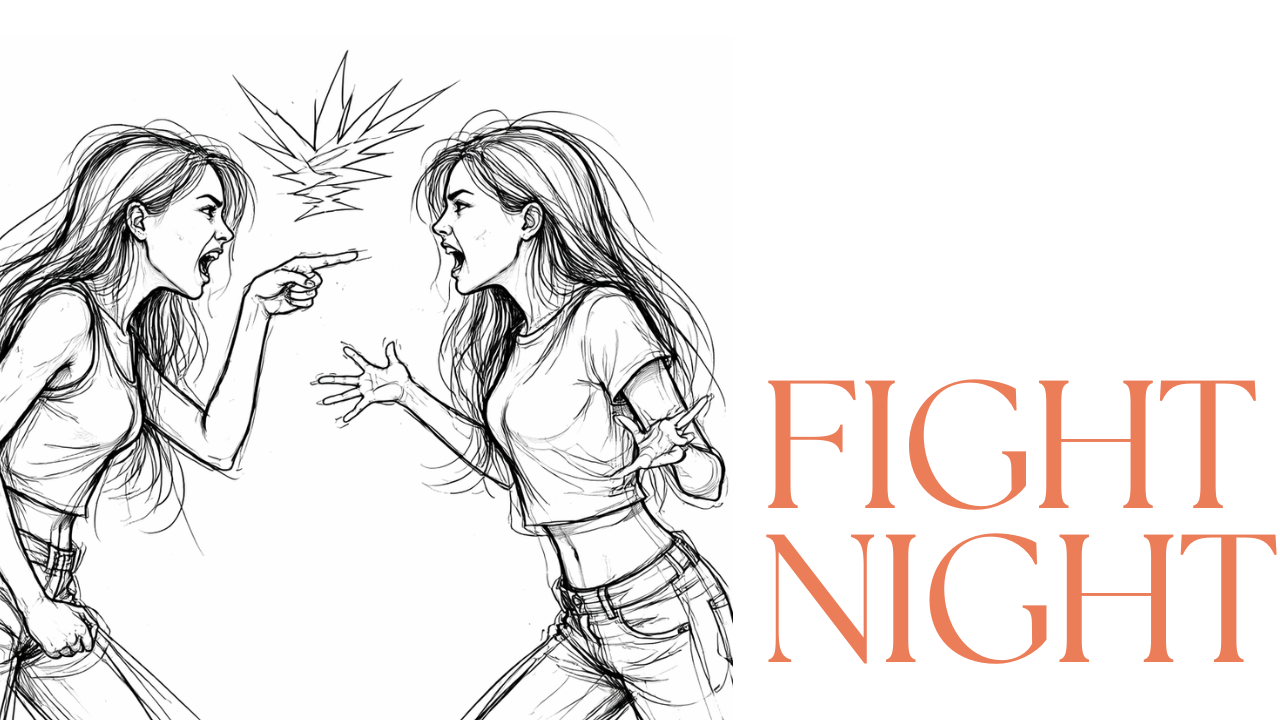
Last night was fight night…
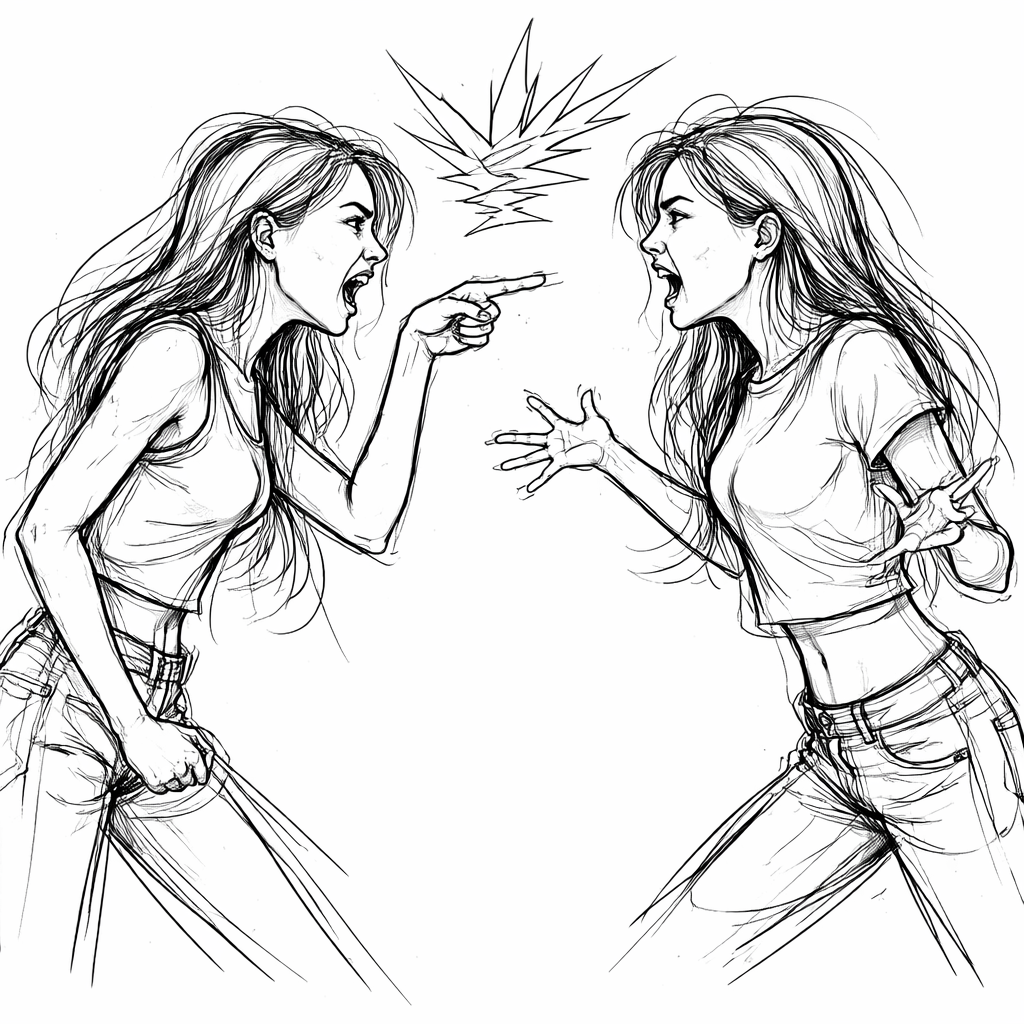
After a long day, I was so excited to crawl into my yummy bed when I was greeted by the beautiful sounds of my girls screaming at each other from down the hall. A full-blown sibling fight. You know the kind.
I had choices.
I could go in and rescue them.
I could turn my sound machine up and pretend I lived alone.
I could silently hope they’d work it out on their own.
Or, dream scenario, maybe my husband would calmly handle it with a steady and empowering presence.
I chose sleep.
In that moment, my presence wouldn’t have been helpful (I was already cranky). I knew they were physically safe. I knew there were real, tender undercurrents fueling the tension (one daughter preparing to leave for college, the other already missing her). And I knew this truth, even if I didn’t love it: sibling conflict is normal and necessary.
So somehow, I rested deeply (thank you Progesterone).
And then morning came.
The very first thought that rushed in was: Are my kids okay?
Cue the alarm bells. Cue the tight chest. Cue the catastrophic thinking.
Catastrophic thinking is when the brain leaps straight to the worst-case scenario. And mine? That my girls won’t be close when they’re adults. Which, if I’m honest, might be one of my biggest fears.
But when I paused and took a breath, I remembered what sibling conflict can also mean.
It means they’re living with roommates they didn’t choose, and let’s be honest, all roommates are annoying sometimes.
It means they’re practicing how to fight. Conflict is hard, and this is where the magic happens.
It means they dump their emotional junk on each other because it’s safe. Emotional dumping isn’t fun, but it makes sense. Home is where kids let it all out. Siblings get the overflow.
It means they’re genuinely irritated with each other; borrowing clothes without asking, clashing over bathroom messiness, interrupting, negotiating time together and apart, having wildly different ideas about privacy.
They have different temperaments
There’s jealousy, even when it’s unconscious, around strengths, attention, or shifting family dynamics.
They have deep attachment needs. Sometimes fighting is actually a bid for closeness or reassurance. Ahhh…psychology. Isn’t it fun?
Welcome to the inside of my home…
I also know that siblings are often competitive.
Grades, sports, personality, looks, social ease. Even subtle comparisons sting. They’re navigating different roles in the family; the “easy one,” the “responsible one,” the “sensitive one,” the “troublemaker.” And, they’re absorbing how conflict is handled around them, whether we like it or not.
And, this part matters; it’s developmentally normal. Truly. Sibling conflict is one of the primary ways kids learn how to navigate relationships.
None of this is a crisis. But it is really annoying.
Exhale. We all know how to do annoying at this point.
So… what do we do?
The answer, of course, depends on age and stage, but the heart of it stays the same.
Sibling conflict is inevitable. How we respond to it is where the real work lives.
Start by staying as neutral as possible and aim to be a calm anchor, helping everyone slow down enough to hear what’s actually happening underneath the noise.
Over time, our job isn’t to eliminate conflict but to teach our kids how to move through it. That means helping them name their feelings, say them out loud, and work toward solutions and repair. And one thing that helps me on a daily basis is to not be attached to a positive outcome. Sometimes they just have to move through it.
At the same time, we adults hold clear boundaries. Physical aggression and cruel language are not okay, even when emotions are big. We are teaching them to find ways to communicate where they don’t ruin their chance of being heard. (Sounds like adult relationships too, huh?)
For those of you raising one incredible human, sibling conflict is just one of many ways kids learn relationship skills. Friendships, cousins, teammates, and even their relationship with you offer rich, powerful opportunities to practice repair, negotiation, and resilience.
Just as important as conflict is noticing when things go right.
Call out moments of cooperation, kindness, humor, and repair. Those moments matter more than we think.
And whenever you can, spend intentional one-on-one time with each child. Feeling deeply seen and valued softens the competition for attention in powerful ways.
When we focus on connection, skill-building, and clear limits, sibling rivalry becomes less about “stopping the fighting” and more about helping our kids build lifelong relationship skills.
And sometimes… it also means turning up the sound machine, putting on your eye mask and trusting the process.