The young women's faces. The lives forever changed.
Well, friends. Like so many of you, I am sickened by the stories of sexual assault that continue to come to light. The sheer number of them. The young women's faces. The lives forever changed.
And while I wish I could say I am shocked, I am not. We live in a culture that too often dismisses, objectifies, and devalues women, sometimes from the very top down. But seeing these young women's faces makes something painfully clear. These are not just headlines. These are someone's children.
As a woman, a mother, and a therapist, I find myself struggling to find words that adequately express what I am feeling. The grief. The anger. The disbelief that we are still here.
How have we created a culture in which anyone believes they have the right to another person's body?
And while these particular stories center on young women, we must remember that boys and nonbinary young people experience sexual violence too. No gender is immune to abuse, coercion, or the shame and silence that so often follow.
I also find myself thinking about the complexity of those who cause harm. Some have experienced abuse or trauma themselves. Others get swept into a group mentality where belonging, power, and the fear of speaking up override their moral compass. And then there are those who witness something wrong and remain silent.
None of this excuses harmful behavior. But if we want to change the culture, we have to be willing to understand it. Compassion and accountability are not opposites. We need both.
I don't have a simple answer. But I do know where we have influence. And that is in our homes, in our conversations, and in the messages we give our children every single day.
Parents, we have a voice. And we have a responsibility to use it.
We cannot assume our children understand consent simply because we have told them to be respectful. We need to be explicit. We need to be thoughtful. And we need to start long before they are navigating sexual relationships.
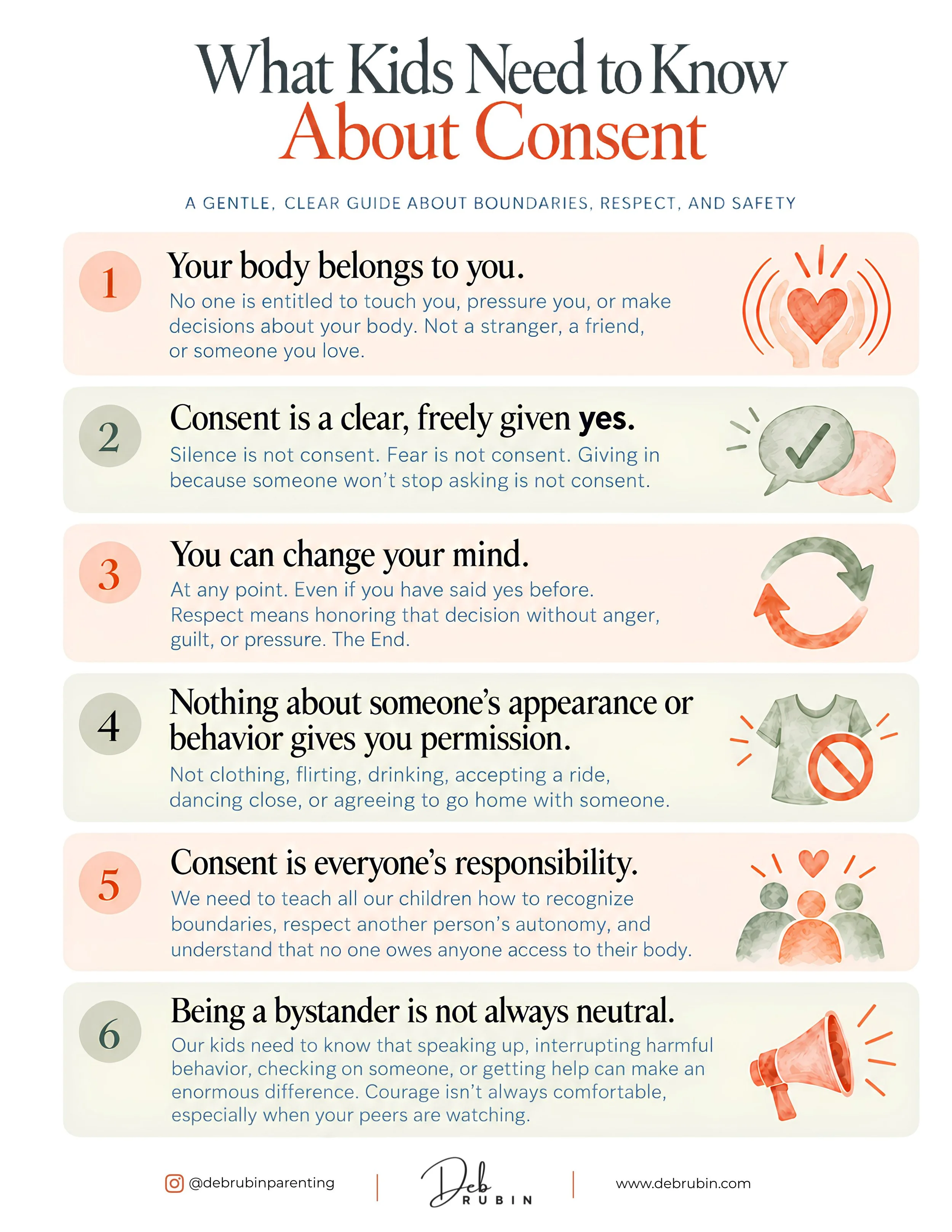
And let's be clear. Someone who is incapacitated by alcohol or drugs cannot consent. And someone who is afraid to say no is not freely choosing yes.
But here's the part I really want parents to understand.
How we have these conversations matters just as much as what we say.
If our children believe we will shame them, panic, lecture, or punish them for telling us the truth, they may stop telling us the truth.
We need to be parents who can tolerate uncomfortable conversations. Parents who can hear things we wish weren't happening. Parents who can hold strong values without shutting down connection.
That means listening more than interrogating. Regulating our own reactions. Being curious instead of immediately critical. And remembering that our children are growing up in a world of pornography, social media, hookup culture, and messages about sexuality that are often confusing and deeply troubling.
They need our guidance, not our silence. And certainly not our shame.
I want our children to understand that sexuality should be rooted in mutual respect, choice, connection, and pleasure. Never obligation, pressure, guilt, or fear.
And I want them to know that if something happens, whether they made a choice they regret, witnessed something troubling, experienced a violation, or even crossed someone else's boundary, they can come to us. We will listen. We will take it seriously. We will help them navigate what comes next, with both compassion and accountability.
You don't need a perfectly crafted speech. Talk in the car. On a walk. At bedtime. Say, "This might feel awkward, but it's too important not to talk about."
And then keep talking.
Because consent is not one conversation about sex. It is a lifelong conversation about dignity, boundaries, empathy, courage, and what it means to be human.
We cannot control every message our children receive from the world. But we can be intentional about the messages they receive from us.
And right now, that feels more important than ever.And let's be clear. Someone who is incapacitated by alcohol or drugs cannot consent. And someone who is afraid to say no is not freely choosing yes.
But here's the part I really want parents to understand.
How we have these conversations matters just as much as what we say.
If our children believe we will shame them, panic, lecture, or punish them for telling us the truth, they may stop telling us the truth.
We need to be parents who can tolerate uncomfortable conversations. Parents who can hear things we wish weren't happening. Parents who can hold strong values without shutting down connection.
That means listening more than interrogating. Regulating our own reactions. Being curious instead of immediately critical. And remembering that our children are growing up in a world of pornography, social media, hookup culture, and messages about sexuality that are often confusing and deeply troubling.
They need our guidance, not our silence. And certainly not our shame.
I want our children to understand that sexuality should be rooted in mutual respect, choice, connection, and pleasure. Never obligation, pressure, guilt, or fear.
And I want them to know that if something happens, whether they made a choice they regret, witnessed something troubling, experienced a violation, or even crossed someone else's boundary, they can come to us. We will listen. We will take it seriously. We will help them navigate what comes next, with both compassion and accountability.
You don't need a perfectly crafted speech. Talk in the car. On a walk. At bedtime. Say, "This might feel awkward, but it's too important not to talk about."
And then keep talking.
Because consent is not one conversation about sex. It is a lifelong conversation about dignity, boundaries, empathy, courage, and what it means to be human.
We cannot control every message our children receive from the world. But we can be intentional about the messages they receive from us.
And right now, that feels more important than ever.
And what a perfect time to join a workshop.

MOM MAGIC
Through this immersive workshop for MOMS ONLY, you will learn about generational mothering, brain development, and how to have heart-forward conversations to help your daughter's deep journey of worthiness and self confidence. All participants will receive practical gems, learning how to drop in, connect, reflect, and communicate, giving her the space to fully express herself as well as how you can hold onto your own truths and boundaries.
We started this week but you are welcome to hop in a get the recordings.
Mother-Daughter Journey
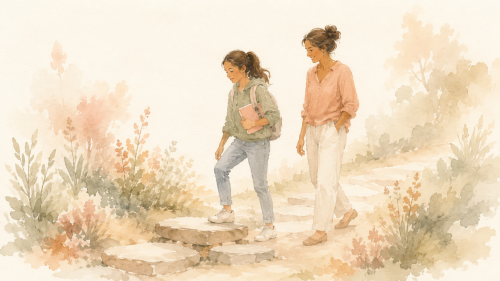
And the Mother Daughter Journey workshop for Moms and their 6th and 7th grade daughters is on October 18th 10am-2pm! This is an incredible way to spend 4 undivided hours with your daughter to learn and practice in real time how to deepen connection.